
Some vagueness is ok. It’s healthy.
It’s easy to get caught up in fruitless semantic discussions about exact definitions, sometimes for things that can’t be defined precisely.
We’re taught as business leaders and we experience: you get what you measure. And this drives us to quantify. A wonderful thing, done in balance.
An endpoint to unbalanced, excessive quantification is the Sorites Paradox, which revolves around the difficulty of setting boundary conditions for vaguely defined things.
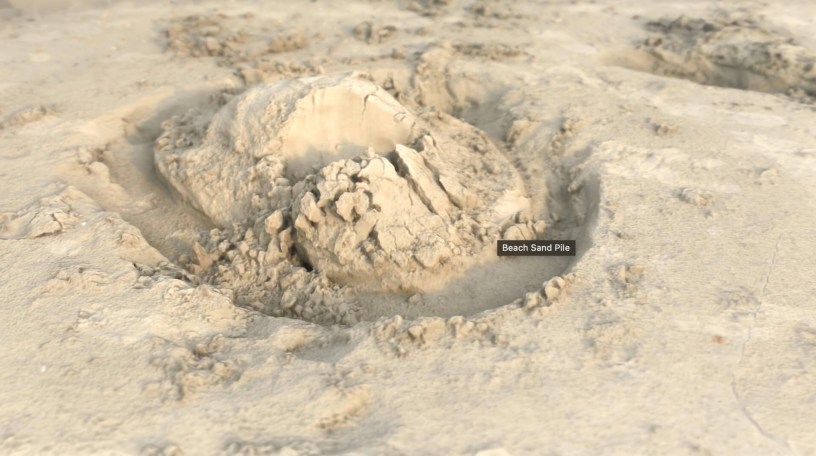
The classical formulation is: if I have a single grain of sand, it’s not a ‘pile.’ If I add one grain of sand it’s still not a pile. So adding a grain of sand to an existing collection of grains doesn’t make it a pile. Thus, no matter how many grains I add, starting with my one grain, it’s never a pile, thus, there’s no such thing as a pile of sand. But obviously there is…that’s the paradox. You can also run this in reverse … start with a pile, subtract one grain, it’s still a pile … rinse and repeat … and you’re left with a ‘pile’ of one grain, which obviously is not a pile.
In the last several years, I’ve had too many conversations about business goals that drive to define how we’re going to measure something before we even know what it is. Of course we want to measure meaningfully. But Big Goals and Big Changes aren’t automatically amenable to straightforward measurement. If they were, they probably would have been done already.
I’m a bit of a metrics nut myself. In saying to embrace vagueness, I feel I may be committing a minor heresy, but I think it’s a good one.
One standard—and fairly obvious—solution to the paradox is to agree on a boundary, or a range of boundaries. When we have big goals or are driving big change, we can quantify if we can, and live with some ambiguity if we can’t. We can discuss and debate and agree, I would hope, on a future state.
After all, we all know what a pile is. Even if we can’t precisely define it, we can describe it.
-Chris
For anyone who wants more Sorites Paradox, there’s a very good and quite exhaustive discussion here: https://plato.stanford.edu/entries/sorites-paradox.
 Chris Knerr